Ministry and the Measuring Stick

As we get closer to Holy Week, we will soon hear the beautiful Scripture story of Jesus washing the feet of the disciples. Afterwards he says to them: Now that I, your Lord and Teacher, have washed your feet, you also should wash one another’s feet. I have set you an example that you should do as I have done for you.” (John 13:14-15)

By His example, we are all called to minister to God’s kingdom. How are we to do that? Living up to the example of Jesus can sometimes feel overwhelming or intimidating. It’s easy to compare ourselves to others and feel that they are doing it “better.” Not wanting to fall short, we try and mimic the way that others minister, even when it doesn’t feel right for us—like trying on a pair of shoes that don’t quite fit.

The measuring stick we use to compare ourselves to others is a very common way of missing the point of what God may be calling us to do. We see the work of others and think: “I could never do that.” By focusing on that person, we are looking at only one way of answering the call of God, assigning holy characteristics to that person. Feeling like we can’t measure up, we give up entirely.

Let’s look at an example. Jesus instructs us to feed the hungry. At first glance, what does that look like? Perhaps you call to mind those incredibly generous people who spend hours every week working at soup kitchens, shopping and cooking for the needy, or running food drives and suppers for the homeless. Once again, the measuring stick comes out.

When this happens, I encourage you to do things:

Do Small Thing With Great Love

Keep in mind that this is not an “all or nothing” endeavor. Maybe you work full time or you have family obligations that prevent you from having lots of hours for volunteer work. Or you live on a budget and can just barely manage your own grocery bill. That’s ok. Find a smaller way to live out this call. Choose one or two items each week to give to the local food pantry. Or donate just a few dollars if that’s all you have to give. 

Keep in mind the words of Mother Teresa: “Not all of us can do great things. But we can do small things with great love.” There may come a time when the circumstances in your life change, and you’re able to do and give more. If you’ve been faithful to Jesus’ call to feed the hungry in whatever way you can right now, it will be an easy thing to expand what you’re already doing.

Examine Your Gifts

Look for creative ways to live out the words of Jesus—ones that are in line with your God-given gifts. Let’s take our same example of feeding the hungry. Are there other ways you can do this?

  • Be on the lookout for someone who’s hungry for your time and attention.  If God gave you the gift of being a good listener, then this one’s for you!
  • Be on the lookout for someone who’s hungry for peace. If you’re gifted at helping people resolve conflict, then you are doing God’s work!
  • Be on the lookout for someone who’s hungry for an encouraging word. If you have a knack for making people feel good about themselves, then you are most certainly answering God’s call to minister to the Kingdom!

The important thing is to continuously look outward. When you seek out those who may be in need—not just for food, but in need of anything—you’ll discover how you may be particularly suited to help them in various ways.

There are different kinds of gifts. But they are all given to believers by the same Spirit. There are different ways to serve. But they all come from the same Lord. There are different ways the Spirit works. But the same God is working in all these ways and in all people. The Holy Spirit is given to each of us in a special way. That is for the good of all.
(1 Corinthians 12: 4-7)

If you open up to the many different ways we can all minister to God’s kingdom, you’ll find yourself putting away the measuring stick, and truly following the example of Jesus in exactly the way you were meant to.
Photo by Timothy Eberly on Unsplash

Roadblocks to the Spirit

Decorative image; road closed sign

Last year, during a particularly bad New England storm, my nephew was trying to get home to visit his parents. The main road in his neighborhood was blocked by a downed wire. He turned around and tried another route, only to find that road was blocked by a tree that had fallen across it. Roadblock after roadblock…it took him almost an hour of circling around town before he could find a way to get home.

Does your spiritual life ever feel like this? Like there’s some obstacle blocking you from getting home to God? This can be a frustrating and lonely experience, but it’s important to remember that these roadblocks are never put there by God! God wants to be in relationship with us. We put up our own barriers, or we let the outside world do it for us.

I have found that there are three types of roadblocks that typically get in the way of a rich and loving relationship with our Creator.

DISTRACTION
Our lives are full of distractions. We’re constantly pulled in so many different directions. I’ve worked in retreat ministry for many years, and the most common reason women resist going away for a retreat is a lack of time. It’s so easy to let other things fill up our lives and crowd out our spiritual growth.

The obstacle of distraction requires us to examine our outer lives. Perhaps it’s time to reevaluate some of our priorities. Making room for God in our lives will give the Holy Spirit plenty of space to dwell in our hearts. Try to take one thing off your plate that isn’t truly serving you or filling you up on your journey of faith.

DOUBT
There are a lot of names for this roadblock. Doubt. Fear. Anxiety. All of these feelings are rooted in a lack of trust. God’s plans don’t always line up with our own plans, and this can leave us feeling shaken and lost. But despite our own doubts, we can be absolutely certain of God’s faithfulness. This belief provides us tremendous comfort as we move through life. The Lord will never abandon us!

The obstacle of doubt requires us to examine our own need to be “in charge.” To surrender to God’s plans and follow where that call may lead. To trust that God is working in our lives. This can be quite challenging for people used to being in control of our lives – but we can overcome that challenge if we believe that God is in control.

GUILT
All too often, I see people holding themselves back from our loving Creator due to a feeling of unworthiness, shame, or guilt. This roadblock is the most heartbreaking, because it’s the most self-inflicted, and it could not be further from the truth. We were created to be loved by God! There’s nothing we can ever do that will separate us from the love of God. As much as we measure our own worth, God doesn’t measure us. Like the prodigal father, God loves us and accepts us exactly the way that we are.

The obstacle of guilt requires us to spend some time really feeling God’s unconditional love and letting it transform us. This can be done by taking a long, loving look at ourselves through the eyes of our Creator. By reflecting on the wonder of our own creation and the unshakeable knowledge that we are God’s beloved.

During this season of Lent, I encourage you to examine anything that might be getting in the way of your relationship with God. See if you can name it. Remind yourself that these roadblocks can be removed through prayer, reflection, and some small changes to your thoughts and actions.

As you grow closer to God over the next 40 days, I offer you this Lenten prayer:

Loving God,
Examine my heart
and help me uncover anything that pulls me away from you.
What obstacles am I stuck behind, hiding behind, or clinging to?
Search my heart.
Help me remove distractions, doubts, and feelings of unworthiness
So that I might live in your love,
follow your call, and grow ever closer to you.
Amen.

Image by Al Seeger from Pixabay

Message in a Bottle

Seashells on beach

A friend of mine describes Cape Cod as her “happy place.” Memories of fun and relaxing summer vacations bring her a sense of peace she can’t find anywhere else. She often remarked that a week every summer was not enough time to capture that feeling and tide her over for the remaining 51 weeks. One day at a souvenir shop, she bought a fancy glass bottle with the words “Cape Cod Air” painted on the side. When she was back home—feeling stressed, anxious, or worried—she would uncork the bottle and take a quick whiff, feeling the tension immediately leave her body. Now…my friend is not naive. She knew it was impossible to actually trap Cape Cod air in a bottle and transport it home. But the ritual of holding the bottle in her hand, taking her mind back to peaceful times, and imagining that she was there again…it worked.

I’m a firm believer in the power of symbol and ritual in our spiritual lives. Using the five senses to create a connection to the Divine can have an amazing effect on our state of mind and our emotional well being. Many church services are filled with symbols and rituals to help us experience God in our midst. A document called “People of Ritual” by the Brisbane Catholic Education Offices states, “All Catholic ritual is founded on the belief that God is present and revealed in the world and, in a particular and powerful way, through Jesus. This means that God is revealed and encountered in the real and tangible moments of everyday life.”

So many of us are still cut off from our places of worship where we normally experience the rituals that bring us close to God. But that doesn’t mean we have to live without them. Most of what I write about spirituality focuses on finding God in ordinary moments, every day experiences, and common objects. We can create our own symbols and rituals to remind us that God is present and all around us. If you learn to look for God in the everyday events of your life, you’ll realize that you can never be separated from God, no matter what might be happening in the world.

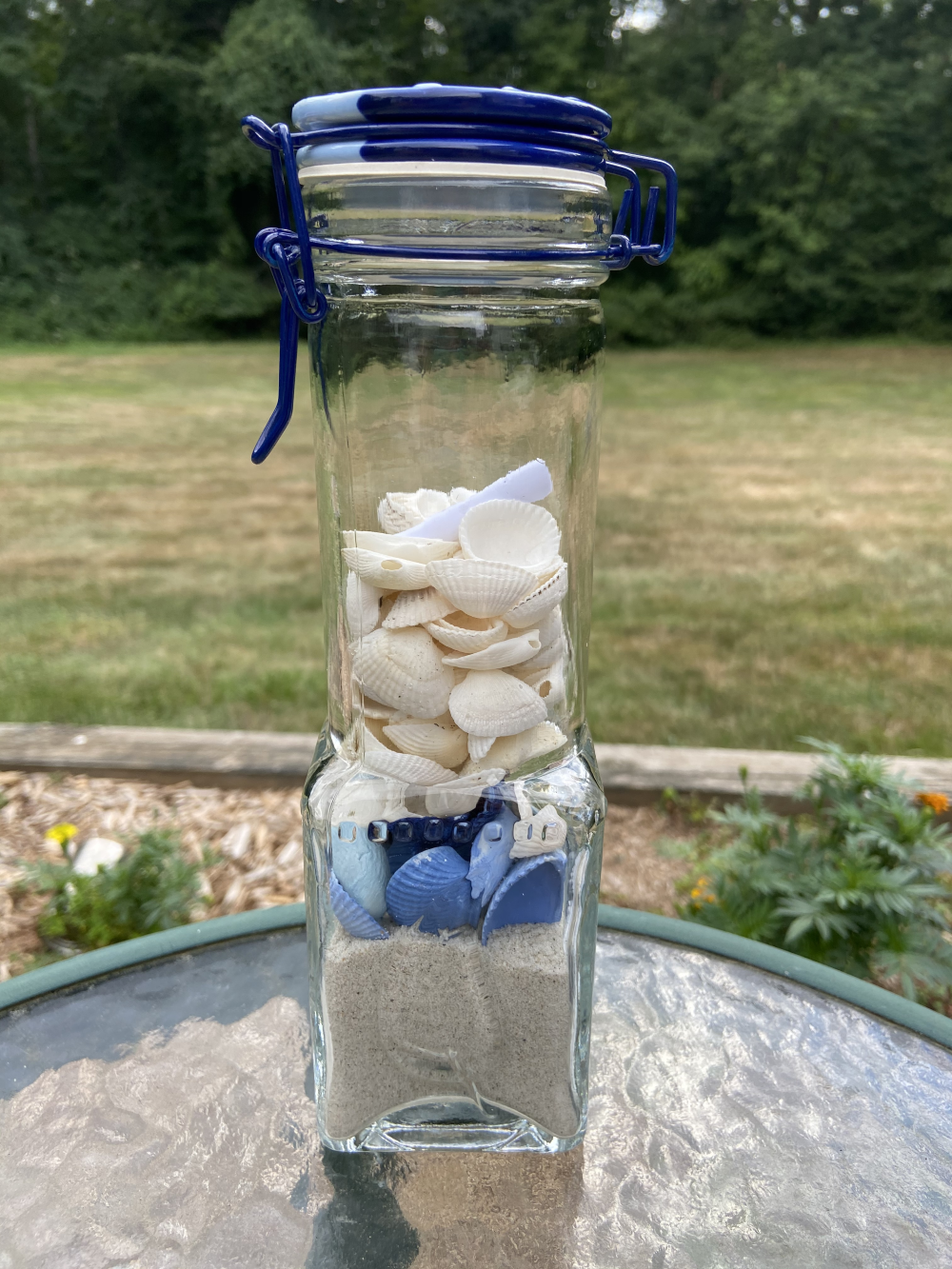
Having just spent four glorious days on Cape Cod with my family, I took my friend’s advice and decided to create my own “bottle” of peace and calm. I spent my vacation collecting shells from the beach, and on the morning we left, I scooped up a few handfuls of soft white sand into a plastic bag. When I got home, I spent a quiet afternoon, painting some of the shells and layering the sand and shells into a glass bottle. I typed up the following quote on a little piece of paper and rolled it up to place in the bottle: “Peace I leave with you; my peace I give you. I do not give to you as the world gives. Do not let your hearts be troubled and do not be afraid” (John 14:27).

Message in a Bottle

I will use my “message in a bottle” to remind me that God is stronger than any of my fears. That I am not alone in my worries. That I have the peace of Christ to carry me through. The bottle now sits on my desk where it can be a constant symbol of God’s presence in my life.

I encourage you to create your own symbol or ritual to remind you of these same truths. You don’t have to be an artist. Fill a bottle or a shoe box with items that make you feel connected to God. A pressed flower. A treasured photograph. A prayer book. A piece of sea glass. Anything that helps you remember that God is present in the “real and tangible moments of everyday life.” Create a mini-chapel in a corner of your house where you can place these objects and look at them often. Turn to these symbols whenever you’re feeling “troubled” and “afraid” and be reminded of God’s overwhelming presence in our lives. We are surrounded by the Divine every day and in every way.

AMEN!

The Watering Can

Watering can

Since the COVID-19 outbreak first came to the United States months ago, how much time have you spent caring for others? Raise your hand if you’re doing (or have done) any of the following:

  • Working through the shutdown as an essential healthcare, transportation, grocery, or sanitation worker
  • Buying groceries for an elderly parent, relative, or neighbor
  • Running errands for someone who is under quarantine
  • Helping your children navigate online learning when schools were shut down this spring
  • Putting in long hours figuring out how to provide online learning to your students
  • Cooking meals around the clock for a house full of family stuck at home
  • Volunteering for local social services such as food banks, shelters, etc.
  • Showing up to march in protest for the equal rights of your black brothers and sisters
  • Sewing masks or collecting PPE to support your local hospitals or nursing homes
  • Providing connection and care to those who are lonely and isolated in quarantine
  • Talking to friends, children, or siblings who are scared and anxious and trying to help them work through their fears

Let me take a moment to tell you that you are wonderful! You are doing God’s work in caring for others during a time of crisis, and your work is appreciated. Today I would like you to reflect on this important question: How much of yourself are you giving away? Is this constant taking care of others taking its toll on your spirit? You can’t become so busy caring for others that your spiritual life suffers. Your relationship with God is the foundation that supports everything else. You can’t be the best YOU without it!

Think of yourself as a watering can. Every time you care for someone, you pour out a little bit of water to nurture them. What happens when the watering can is empty? What are you doing to refill it? Are you taking time to rest? Are you taking time to sit in the stillness and feel the presence of God all around you? Are you praying, meditating, taking long walks in nature, playing your favorite spiritual music, or finding other ways to connect with God?

Re-filling your watering can has to be a commitment. You can’t wait around for the time to present itself. With the state the world is in right now, it might not happen anytime soon. The work of caring for others never ends. There’s always one more thing you can do. Let it be a gift you give to yourself—making the conscious decision to stop and fill up your watering can in whatever way works best for you.

The good news is, you don’t have to do this alone. I’m sure you have someone in your life —a friend or family member—that you can always count on to lift your spirits. No matter how hard your day is, how tired or stressed you are, when you’re with that person, they make you feel good. That’s what God can and should be for you when your watering can is empty. Allow yourself to rest in God. To be refreshed by the peace and joy that can only come from God.

Then you will be ready to be poured out once again.

What We Have is Enough

hydrangea

All my life I’ve been in love with hydrangeas. Huge beautiful flowers in gorgeous colors that reflect the ocean and the sky. They remind me of lazy days on vacation at Cape Cod and endless summer afternoons. I always dreamed I would one day live in a house with rows of hydrangea bushes in dazzling colors. 

Well…I’ve been in my house for 20 years and I had more failed attempts at growing hydrangeas than I could count. Admittedly, I’m not the world’s best gardener, and for whatever reason they  just wouldn’t grow in my yard. I had all but given up, when five years ago my in-laws gave me a beautiful hydrangea bush for Mother’s Day. This one did well! It grew stronger and fuller every year, with healthy green leaves and bountiful blooms. Granted, it wasn’t the overflowing garden of many hydrangeas I once dreamed about, but I decided it would be enough. 

This one hydrangea bush would be enough, and I would love it fiercely.

This summer, for some reason, my beloved hydrangea bush only produced one solitary bloom. I was so disappointed! Like so many of you, I’d been stuck at home for months during the quarantine, with nothing to look at but my front yard and my back yard. I had been looking forward to seeing the hydrangea bloom in full glory this summer.  

So I had another decision to make. I could continue to focus on the lack of blooms—on what my garden was lacking—or I could decide that my one bloom was enough. And so that’s what I did. I’m loving that bloom fiercely.

Best-selling author Melanie Beattie once wrote, “Gratitude unlocks the fullness of life. It turns what we have into enough, and more.” It is absolutely true that the COVID-19 pandemic has taken so much from us. Time with our loved ones, moments of celebration with family and classmates, liturgies in our churches, proms, graduations, hugs. It’s completely understandable to have a hard time letting go of all that we’ve lost and are still losing. However, a constant focus on what we lack can lead us to overlook what we already have. 

“And so we know and rely on the love God has for us.
God is love. Whoever lives in love lives in God, and God in them.”
(1 John 4:16).

With God we have more love than we could ever imagine. Abundant, overflowing, excessive, bountiful, crazy amounts of love. After that, everything else is just a bonus.

There are always going to be things we don’t have enough of. Not enough sleep. Not enough time. Not enough money. Not enough help around the house. And yes, not enough hydrangeas. But if we look within, and bask in God’s love, we’ll realize that we have enough of what truly matters.

I challenge you today to gently turn your thoughts away from all that you are lacking, and focus on one solitary thing that you do have. Whatever it may be—a delicious meal, a phone call with a friend, a restorative nap, a tomato you grew in your garden, a cuddle with your pet—treasure that experience. And love it fiercely. 

The Breath of Life: The Killing of George Floyd

dandelion 3

In these extraordinarily troubling times, I find myself reflecting on the act of breathing.

Breathing is so basic and fundamental to life, but it also calls forth our connection to God in a very powerful way. The book of Genesis says: “Then the Lord God formed man of dust from the ground, and breathed into his nostrils the breath of life; and man became a living being.” In Latin, spiritus means “the breath of life.”  The very spirit of God breathed into us at the moment of our Creation.

Using breath as a form of prayer is an ancient Christian practice. The Hebrew words for “breath” and “spirit” are the same. When we’re breathing, we call forth the Holy Spirit that dwells within us. We’re using our bodies to focus on the essence of our connection with God—our own moment of Divine creation when God breathed the breath of life into our nostrils.

In practices like yoga and mindfulness, we focus on breath to center ourselves, to calm our minds, to relieve pain. How easily we take for granted the simple act of taking in oxygen to sustain life in our human bodies.

Then came COVID-19 with its insidious attack on our respiratory systems. We realized how fragile life can be.  As conversations swirled around chest pain, ventilators, and intubation tubes, we watched this virus cruelly suffocating people, resulting in death, after death, after death.

But it wasn’t COVID-19 that killed George Floyd. His life was taken by a cruel act of violence at the hands of a police officer. His words “I can’t breathe” should haunt each and every one of us as we confront this vile sickness of racism that plagues our country and robbed George Floyd—and so many other Black citizens—of their breath and their lives. Systemic racism is a contagion that has been around far longer than COVID-19, and has taken life and liberty from countless numbers of God’s children.

For those of us with privilege, doing our part to rid the world of COVID-19 was in many ways easy. All we had to do was stay home. We made donations from the safety of our computers, we sewed masks, and we supported our local businesses.  But we also took long walks, played board games, baked bread, and organized Zoom gatherings with our loved ones. We spent more time than ever before outside, breathing in deeply as winter gave way to spring. We worked hard to manage our anxiety as we prayed for God’s healing for all those who were sick, and we prayed for God’s protection for all those bravely serving on the front lines of this virus.

For those of us who are white, doing our part to rid the world of racism will not be as easy. It will make us uncomfortable and ask more from us than we may currently be giving. We must begin by examining our own assumptions and behaviors, and this can be a painful process. We must speak up in ways that may feel scary. I have been guilty of this for many years.  I stayed quiet for fear of “making waves,” turning people away, saying the wrong thing, or offending someone.

Remember, Jesus came to challenge the status quo. He wasn’t afraid to speak out, to call out hypocrisy, to stand in solidarity with the marginalized and the oppressed. If we believe in a God of love, we cannot remain silent. If we believe in the sanctity and dignity of human life, we must actively speak out against the loss of Black lives from systemic racism and acts of hatred. In the words of Fr. William Wallace, O.S.A., J.D.­As members of the one Body of Christ we must stand in support of all those who are understandably outraged and who feel that they are not being heard. We must affirmatively choose the more difficult, but more right and just, path of engagement and action, instead of the easy path of indifference and inaction.”

I am more conscious of my breathing now, recognizing each breath as a gift from God. A gift that belongs to each and every one of us. I will use my breath to thank God for sparing me and my loved ones from the terrorizing reality of COVID-19. I will use my breath to talk about the fact that Black Americans are disproportionately affected by this virus and are losing jobs at a higher rate. I will use my breath not only to pray for an end to racism, but to actively work to be part of the solution, speaking out against the racial violence that has been perpetrated against Black Americans for hundreds of years. I will use my breath to listen, to educate myself, and to stand in solidarity with the Black community.

“And what does the LORD require of you? To act justly and to love mercy and to walk humbly with your God.” (Micah 6:8)

Encountering God Within

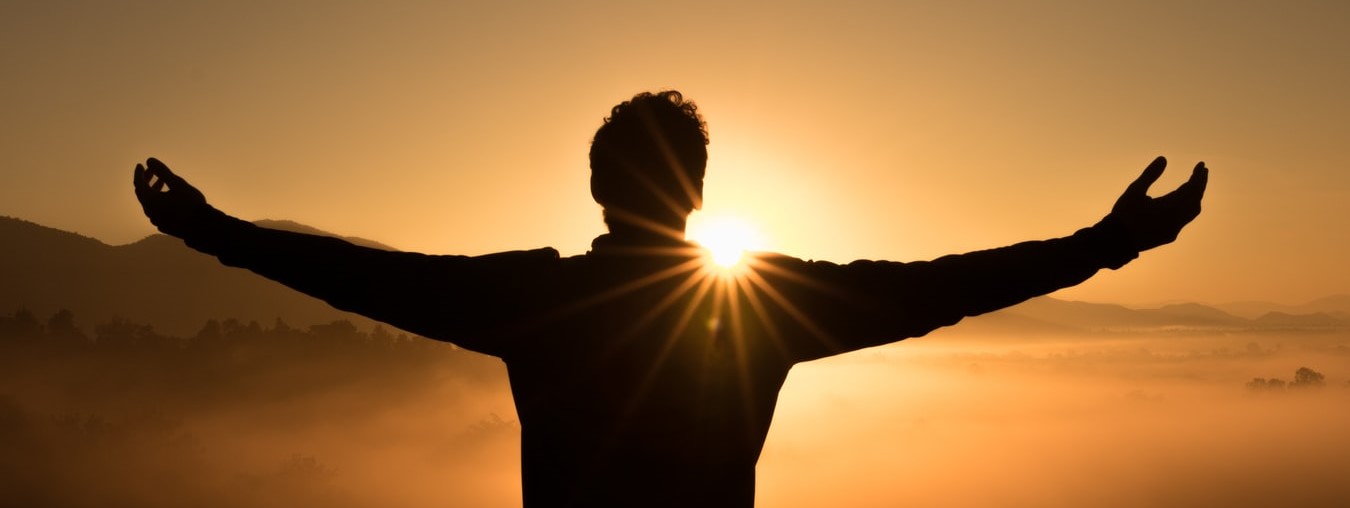
silhouette prayer

With churches closing all over the world due to the spread of COVID-19, many of us are being kept away from our parishes, our beloved retreat centers, or other places of prayer. It’s easy to feel closed off from God during this time. 

If we can’t get in…how can we encounter God?

We are used to seeking God outside of ourselves, but now we must find God in our own hearts. This time of social distancing requires us – even encourages us – to look deep within, for the Holy One dwelling inside of us. Distractions of the outside world are greatly reduced as we embrace stillness and quiet. We take solace in nature. In God’s beauty. In the knowledge that we can rest in God when we feel overwhelmed with worry, sadness, or exhaustion.

Jesus says: “Remain in me and I will remain in you.” (John 15:5).  What does it mean, to have Christ remain in us? It means that Jesus is not someone who exists outside of us. He dwells within us, a constant presence and source of hope. 

In Richard Rohr’s meditation “God is Everywhere” he states: “The pinnacle of prayer is reached when we can trust that we are constantly in the presence of God. We cannot not be in the presence of God!” Our churches may be closed, but we – the children of God – are open to God’s great love. We are open to pray for one another and our world. We are open to God’s gift of grace. Amen!

Please share your thoughts below. How are you keeping your faith life alive during this time of church closings?

A Prayer of Receiving

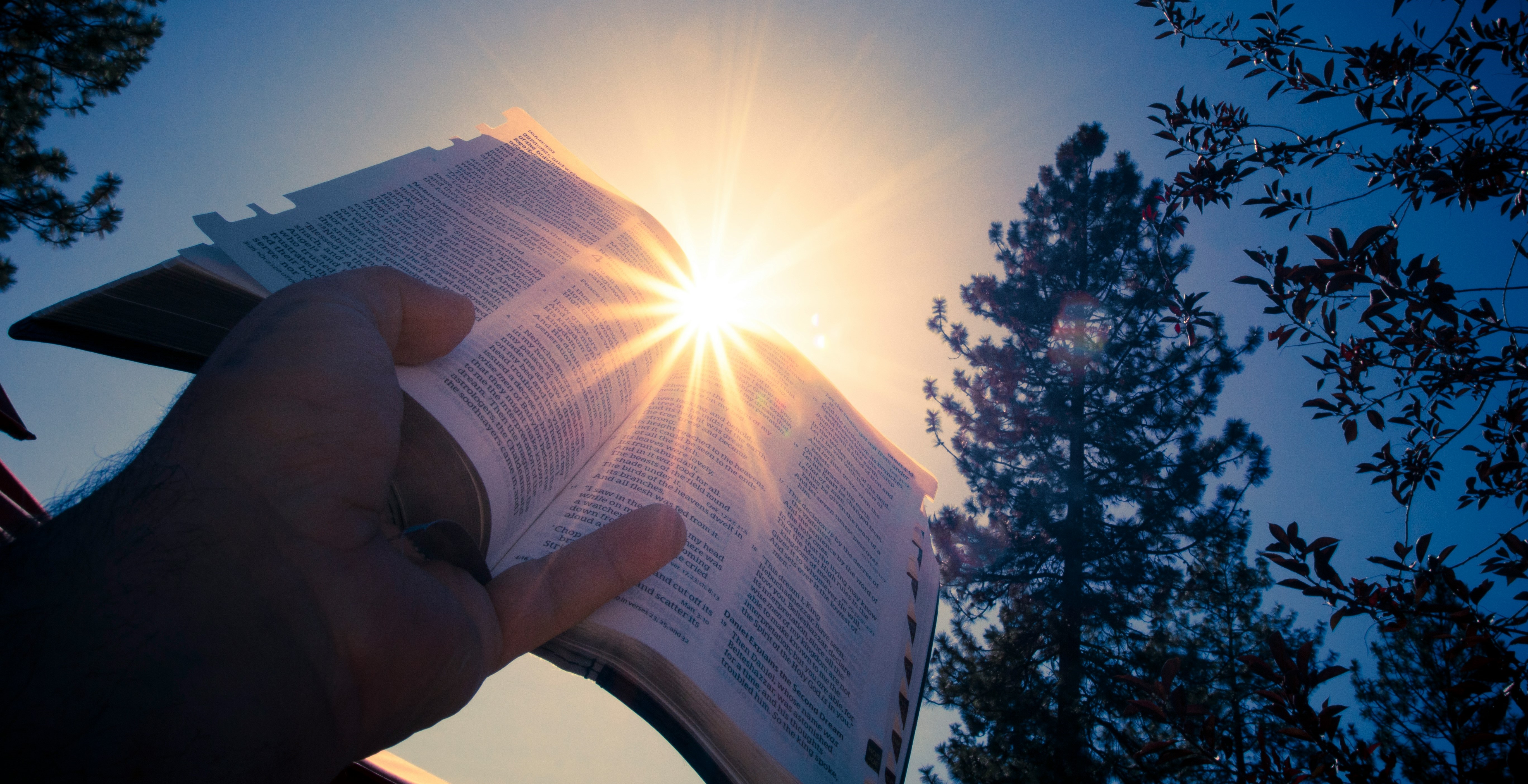
Winter sun

We pray in wonder and awe for Creation, your ancient gift of grace. You made the sun and moon, the land and seas, and all the creatures of the earth. You created us in your own image as your beloved sons and daughters. Today we reflect on your gift of precious life here on earth.

Open our hearts, O Lord, to receive your gift of amazing grace.

We pray in wonder and awe for your gift of grace—fulfilled in your Son, Jesus Christ, who suffered death on a cross that we might live. In mercy, you gave us your Son to pay ransom for all our sins. Today we reflect on your gift of everlasting life.

Open our hearts, O Lord, to receive your gift of amazing grace.

We pray in thanksgiving for the blessings you grant us. Your grace is not something we must earn or deserve. It is a gift freely given. We pray in thanksgiving for your extravagant love. Like the compassionate father, you welcome us home when we are lost.  Your redeeming grace rescues us from a life of darkness.

Open our hearts, O Lord, to receive your gift of amazing grace.

We promise to seek you in sanctuary. In the quiet stillness, we hear you speak to us. In your loving embrace, we are restored and nourished. We promise to seek you in the everyday moments of ordinary life. To pray where we are and invite you into each moment. Through this ongoing conversation with you we receive peace and contentment.

Open our hearts, O Lord, to receive your gift of amazing grace.

Give us new eyes to see the beauty of God’s creation, new ears to listen for God’s whispers, and a new outlook to experience the transforming power of your love.

AMEN.

A Prayer of Emptying

Snow on branch

Lord, I bring to you all that is on my plate.  The noise, the clutter, the chaos, and the distractions.  Help me to empty myself so that I may see you, hear you, and feel your presence.

Loving God, may your Spirit come to move my life. Empty the interior space of my soul that I may receive you and discover who I truly am.

Lord, I bring to you my fears and worries…all the things that are so heavy and hard to carry. I place them into your hands.

Loving God, may your Spirit come to move my life.  I place my trust in you. I place my faith in you. I place my life in you.

Lord, I bring to you my burdens. Things that I cannot control weigh me down like a heavy rock.  On the days that I am tired, stressed, and weary, I know that you walk with me.

Loving God, may your Spirit come to move my life.  I know that you are my rock—my cornerstone—and I can find rest in you.

AMEN.


Photo by Roman Trofimiuk on Unsplash

A Road Map to Balance

Stack of stones

Are you able to recognize when your life is out of balance? What does it mean…and what does it look like?

It often happens gradually and most of the time we are so caught up in the daily-ness of life, that it wouldn’t even occur to us that we might be out of balance. We work like crazy, pushing ourselves to the limit. We don’t realize that our minds are burned out, our bodies are worn out, and our spirits are wrung out. 

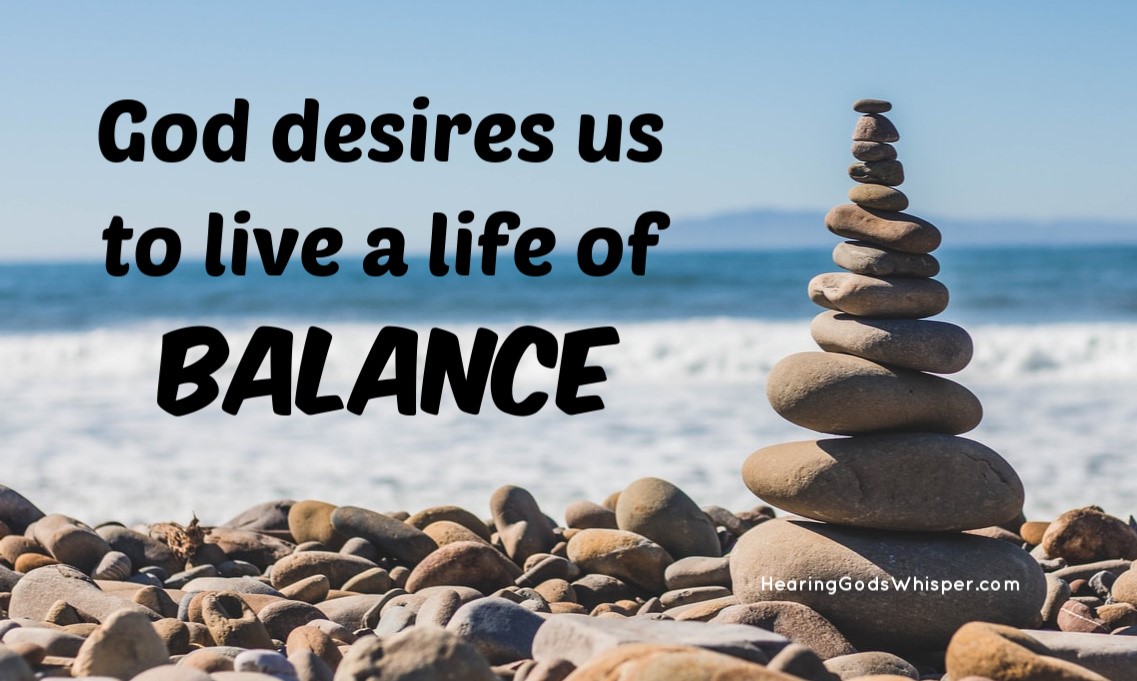
God created us to live a life of balance.

BALANCE OF MIND
A friend of mine told a story of a particularly busy time of working long hours for weeks on end because her job required it. She gave herself no breaks and took no time to rest her mind or recharge her batteries. She came home from work one night and her husband offered to pick up dinner. “What would you like?” he asked her. “Choose your favorite takeout restaurant and I’ll go get us something to eat.”  My friend had stretched herself so thin that she couldn’t even make that simple decision. Her brain just couldn’t do it. On the verge of tears she looked at her husband and said: “You know what I like. Can’t you just choose something?” This was a moment of a life out of balance.

BALANCE OF BODY
When your body is out of balance, you will eventually figure it out, too. Lack of sleep catches up with you. Poor nutrition can zap you of energy. Not drinking enough water can lead to headaches and even dizziness. And this idea of balance can go the other way too. Exercise and healthy eating can become a preoccupation. I’ve seen athletes push themselves to the point of injury because they didn’t pay attention to the signs from their own bodies.

BALANCE OF SPIRIT
When our spirit is out of balance, we tend to overly focus on one emotion or feeling—usually those emotions that do not bring us joy. We fixate on bitterness over love. Guilt over acceptance. Deficit over abundance. Fear over faith. The backdrop of our spiritual life can also fall out of balance. Solitude can lead to loneliness. Crowds can become overwhelming. If we put all our focus on doing one thing, our spiritual life will feel off kilter. Faith calls for us to live through prayer and action. Through time alone with our Creator and time spent helping our brothers and sisters.

God desires us to live a life of balance.  

Once we discover that we are OUT of balance, how do we get back on track? How do we achieve this balance in our lives? After you finish reading this blog post, take out a piece of paper and write down the following four questions:

  • What is important in my life?
  • What are some things I absolutely need in life to feel happy?
  • What brings meaning to my life?
  • What makes me feel inspired?

Over the next few days, weeks, or even months, spend some time pondering your answers to these questions. Write them down so you can refer back to them. This is your road map to balance. Anything you do that brings you closer to the things you’ve written will center you. Anything you do that drives you further away from these things requires further examination. 

Some of it may be necessary. We have obligations in life that bring stress and exhaustion and we can’t change it. But we CAN make smaller changes to weed out some things that are not important. To put less focus on the things we don’t truly need. To diminish that which does not bring meaning to our lives. And to lean into that which inspires us.

The changes might be internal. (Gently changing our thoughts.) They may be external. (Seeking out friends who help us achieve this balance.) They may be faith-based. (Asking God in prayer to help us stick to the things that really matter.) It’s an evolving, constantly changing process. We move toward balance, we fall out of balance, we move back again. But we know that in this journey towards balance, God is with us every teetering and steady step of the way.

Let’s learn from each other! Share your thoughts on achieving balance in the comments below.


Photo by Jeremy Thomas on Unsplash