Let God Take Care of You

Remember the 2009 iPhone commercial with the famous line: “There’s an app for that!”?  In my never-ending quest for better ways to take care of myself, I’ve discovered that there truly is an app for everything. Gratitude apps, meditation apps, daily prayer apps, journaling apps, yoga apps, mindfulness apps. Honestly it feels kind of exhausting keeping up with all of this! I wonder if the pursuit of self-care can have a sneaky side effect of increased pressure and stress. Our determination to fit in all of these “10-minute” things to make us feel nurtured and cared for can actually have the opposite effect!  

My question is: Why do we feel we need to go it alone? Why do we make ourselves solely responsible for our own care? The wonderful reality of our faith is that we are never alone! We worship a loving God who created us for the sole purpose of loving us. God desires—and is mighty enough—to carry our burdens and help us find rest.

Come to me, all you who are weary and burdened, and I will give you rest.
Matthew 11:28

When I try to think of a human experience that most closely resembles this feeling, I think back to my beloved grandmother and how she made the best soft-boiled eggs. There was nothing that made me feel more cared for than sitting at the kitchen counter, chatting with my grandmother while she made me soft-boiled eggs on toast. Even after I learned how to make my own…I rarely did. That was our special ritual. Something she did for me because she knew how much I enjoyed it. They never tasted quite the same when I tried to make them myself.

When you feel wrung out dry or stretched too thin, come to the “kitchen counter” and let yourself be cared for. Lean into the Lord. Let your loving Creator nurture you while you do nothing but simply sit and feel loved. It’s not a task like writing in a journal or making a gratitude list. It’s a feeling. An experience of being held.

This need so many of us have to constantly seek out new types of self care reminds me of the Scripture: Seek the Lord while he may be found. (Isaiah 55:6) There is absolutely a time and a place for this kind of spiritual quest, but if I’m being honest, there are times when I’m simply too weary to do any seeking. When I’m feeling this way, I think back to something I heard in a sermon once: Jesus is the Good Shepherd and we are His sheep. It’s not the job of the sheep to go off looking for the shepherd. And so as believers, we have one simple job…to be found.

God knows us intimately and loves us unconditionally, and we don’t have to do any work for that to happen. Now if you’re like me, I’m sure you’re saying: “OK, sounds good!  I would love to let God take care of me. So how do I do that?  What are the steps I need to take? Is there an app for that?”

I encourage you to resist thinking about this as something you need to do. The closest I can come to an app for you is Psalm 46:10 – Be still and know that I am God. Find some time to be still and just meet God in the present moment with no agenda, no “to do” list, and no goals of what you hope to accomplish. Just be. The present moment is where we see the face of God, and all we have to do is open our eyes and look—and let God look back at us. This moment of loving connection with our Divine Creator will leave us feeling refreshed, restored, and cared for more than any app could ever do.

Photo by Neil Soni on Unsplash
Roadblocks to the Spirit

Decorative image; road closed sign

Last year, during a particularly bad New England storm, my nephew was trying to get home to visit his parents. The main road in his neighborhood was blocked by a downed wire. He turned around and tried another route, only to find that road was blocked by a tree that had fallen across it. Roadblock after roadblock…it took him almost an hour of circling around town before he could find a way to get home.

Does your spiritual life ever feel like this? Like there’s some obstacle blocking you from getting home to God? This can be a frustrating and lonely experience, but it’s important to remember that these roadblocks are never put there by God! God wants to be in relationship with us. We put up our own barriers, or we let the outside world do it for us.

I have found that there are three types of roadblocks that typically get in the way of a rich and loving relationship with our Creator.

DISTRACTION
Our lives are full of distractions. We’re constantly pulled in so many different directions. I’ve worked in retreat ministry for many years, and the most common reason women resist going away for a retreat is a lack of time. It’s so easy to let other things fill up our lives and crowd out our spiritual growth.

The obstacle of distraction requires us to examine our outer lives. Perhaps it’s time to reevaluate some of our priorities. Making room for God in our lives will give the Holy Spirit plenty of space to dwell in our hearts. Try to take one thing off your plate that isn’t truly serving you or filling you up on your journey of faith.

DOUBT
There are a lot of names for this roadblock. Doubt. Fear. Anxiety. All of these feelings are rooted in a lack of trust. God’s plans don’t always line up with our own plans, and this can leave us feeling shaken and lost. But despite our own doubts, we can be absolutely certain of God’s faithfulness. This belief provides us tremendous comfort as we move through life. The Lord will never abandon us!

The obstacle of doubt requires us to examine our own need to be “in charge.” To surrender to God’s plans and follow where that call may lead. To trust that God is working in our lives. This can be quite challenging for people used to being in control of our lives – but we can overcome that challenge if we believe that God is in control.

GUILT
All too often, I see people holding themselves back from our loving Creator due to a feeling of unworthiness, shame, or guilt. This roadblock is the most heartbreaking, because it’s the most self-inflicted, and it could not be further from the truth. We were created to be loved by God! There’s nothing we can ever do that will separate us from the love of God. As much as we measure our own worth, God doesn’t measure us. Like the prodigal father, God loves us and accepts us exactly the way that we are.

The obstacle of guilt requires us to spend some time really feeling God’s unconditional love and letting it transform us. This can be done by taking a long, loving look at ourselves through the eyes of our Creator. By reflecting on the wonder of our own creation and the unshakeable knowledge that we are God’s beloved.

During this season of Lent, I encourage you to examine anything that might be getting in the way of your relationship with God. See if you can name it. Remind yourself that these roadblocks can be removed through prayer, reflection, and some small changes to your thoughts and actions.

As you grow closer to God over the next 40 days, I offer you this Lenten prayer:

Loving God,
Examine my heart
and help me uncover anything that pulls me away from you.
What obstacles am I stuck behind, hiding behind, or clinging to?
Search my heart.
Help me remove distractions, doubts, and feelings of unworthiness
So that I might live in your love,
follow your call, and grow ever closer to you.
Amen.

Image by Al Seeger from Pixabay

Falling Into God

Last summer I attended a family reunion in the mountains of northern Maine. One day a group of my nieces and nephews journeyed out to a swimming hole that you could only reach by jumping off a high rock wall. Everyone tried it, including my youngest niece who was only eleven years old! She later admitted that it wasn’t her favorite experience. She didn’t like the feeling of her stomach dropping as she fell. I knew exactly what she meant. I hate that feeling. It’s why I don’t ride roller coasters or jump off high diving boards. The disorienting, out-of-control feeling of falling is not something I would ever do on purpose.

Similarly, the phrase “taking a leap of faith” has never really resonated with me. To me it sounds like the exact same feeling as falling, and I’m not interested! So many other ways we talk about our faith journey evoke this same feeling: falling in faith, surrendering. For people who like to play it safe, this can be a roadblock.

Can we look at this another way? Falling in faith doesn’t have to be an out-of-control free fall with no idea what waits at the bottom. Consider these images:

  • Falling into bed at night letting the soft sheets and fluffy pillows comfort us.
  • Falling in love with a future spouse, a newborn baby, or a special place.
  • Softly falling rain that quenches the earth.
  • Falling to our knees in prayer and gratitude.

Each kind of falling involves a type of surrender – but oftentimes a gentle one. We surrender to sleep – or the deep rest of unburdening that only God can provide. We surrender to the loving arms of God. We surrender our pain and our burdens in prayer. 

These acts of surrender may not be as splashy as the bold leaps of faith we witness in others, but they can bring us just as close to God. And I would encourage you to see that when we do these things, we actually aren’t playing it safe! Trusting that God will meet our needs takes strength and rock-solid faith. The further we allow ourselves to fall, the higher God will lift us up.

Spend some time this week thinking about the ways you allow yourself to fall into your faith. Share your thoughts in the comments section!

Keep Your Eyes Fixed on God

Multitasking is a valuable skill.  It helps us in our jobs, in managing a household, and in taking care of loved ones. Being able to do many things at once keeps the wheels of life in motion. However, when it comes to negative emotions, multitasking has the opposite effect. Letting our thoughts bounce between worries, stressors, regrets, and pressures keeps us frozen in place. We find we are so overwhelmed by these emotions that we can’t move forward at all. The wheels will either get stuck in place or run off the road entirely.

So how can we avoid this kind of unhealthy mental multitasking? A fun example I’d like to share is playing Mario Kart with my sons. I should start by confessing that I’m pretty bad at video games. I was amazing at Pac Man, Space Invaders, and Frogger back in the 1980s, but my skills got pretty rusty after that. So I almost never win a race in Mario Kart. In fact, just staying on the track is usually all I can manage. 

These video games have a lot of sensory overload. Colorful animated tracks, a fun and lively musical soundtrack, and many characters crowding the track. And there’s a lot you can do on the way. You can pick up items and use them to sabotage other players or give yourself extra powers. You can take shortcuts. You can peek at the screens of the other players to see what they might be planning. Experience has taught me that if I try to do any of those extra tasks, I’m sure to crash, run off the road, or occasionally start driving in the wrong direction without even realizing it! For that reason, my strategy is simple – just drive. I keep my eyes fixed on the road and keep moving around the track, ignoring all the distractions along the way.

During times of stress or emotional overload, this is how I like to keep my eyes fixed on God. I ignore all the distractions around me and just try to focus on God’s presence before me. It doesn’t make the roadblocks or pitfalls go away, but it keeps me moving past them.

Author Steven Covey once wrote: “The main thing is to keep the main thing the main thing.” For me, the “main thing” is my belief in a loving God who guides my journey every step of the way. Keeping my eyes fixed on that has been my best defense against mental multitasking.

Keeping your eyes fixed on God requires faith—a belief that God has a plan for your life and is working in your life for good.  It requires prayer—a relationship with God that is active and alive. And it requires practice. Negative emotions are going to always be there to distract you and pull you further away from God, but with time and practice you can get better at not giving those emotions so much of your attention.

So the next time the race track in your mind is swirling with activity, remember to keep your eyes on the road and just drive.

God Never Changes

Live every day like your favorite Ben & Jerry’s ice cream flavor might be discontinued.

This may sound like strange advice (and a guaranteed way to raise your cholesterol!) but I’m using it as a metaphor to talk about permanence…or more the lack of permanence in our world. 

In 2004 Ben & Jerry debuted Dublin Mudslide as a new, limited edition flavor. It became a fan favorite and was quickly promoted to a full-time flavor. I absolutely loved it! It was my number one dessert year round. For three blissful years, it never occurred to me that I wouldn’t be able to enjoy this ice cream—until it was suddenly and without warning discontinued and sent to the B&J “Flavor Graveyard” in 2007. (I have since learned that there are over 30 flavors in the Flavor Graveyard. Perhaps your favorite was laid to rest there too?)

Before this becomes a foodie blog, let me get back to my metaphor. Not much is permanent in this life. We know this. Situations change. People come and go from our lives. The job you counted on gets eliminated. Your trusted doctor retires. The friend you thought you could rely on doesn’t show up for you. And yes, even your favorite ice cream flavor disappears. Nothing brought this lack of permanence into starker reality than the pandemic, which changed almost everything about the way we were living our lives. We couldn’t count on anything during those first frantic months of lockdowns! 

Focusing on the impermanence of life can lead to a lot of fear and anxiety. Not knowing when things might change leaves us feeling untethered to any sense of safety or security. So how can we move through our days free from this lingering fear? By remembering this:

Jesus Christ is the same yesterday and today and forever.
(Hebrews 13:8)

One thing we never have to worry about changing or disappearing is the unfailing faithfulness of God. We never need to doubt God’s love for us, God’s presence in our lives, or God’s plans for us. 

God was in the beginning. God is now. God will always be.

How does this knowledge affect how we respond to change in our lives and in the world? Knowing that God never changes gives us something to cling to. Something we can trust and depend on. God is the Rock of Ages. This stability…this rock-solid belief and certainty helps us move through times of change and loss without falling apart.

My story has a happy ending. A few months ago…fifteen years after being sent to the Flavor Graveyard, Dublin Mudslide is back! I’m enjoying it now with a new sense of appreciation. This delicious treat is part of my present now, and I’m going to enjoy it for as long as it lasts!

Walking With God Through Pain

Scenic photo with quote: God is powerful enough to carry us through our pain.

It has been scientifically proven that our brains are hard-wired to avoid pain. This has helped humans survive by recognizing threats and danger. But in a big and complex world, we can’t always avoid pain in our lives. Try as we might, we can’t always prevent pain in our bodies, such as illness, injury, or the natural process of aging. Unavoidable pain can also present itself in our minds—with anxiety, depression, and other mental health struggles. And our spirits can unexpectedly feel pain through broken relationships, heartbreak, setbacks and loss. When any type of pain enters our lives, our first instinct is to pray to our powerful and mighty God: Please take this pain away!

When the pain lingers, we feel confused and even a little betrayed. God can do all things… why am I still hurting? I’m honestly not sure I have a good answer to this question except to say that we live in a world of science and free will, and pain can sometimes be a part of that world. It’s why I believe that acceptance is such a big part of faith. Refusing to accept a painful time in our lives can lead to doubt, frustration, and a loss of trust in God. Dr. Julia King, a clinical psychologist specializing in anxiety, writes: “We create suffering for ourselves when we desperately wish things were different when, at least right now, they cannot be.”

So where can we find God amidst our pain? I firmly believe that God does not cause our pain or desire for us to suffer; however, God is powerful enough to carry us through our pain and even bring blessings out of it. So maybe instead of asking God to take away our suffering, we pray instead: God, please walk with me through this pain.

Imagine a parent confronted with a child in pain. The parent wants to do anything to make that child happy again. It hurts too much to see them suffering. But again, it’s not always possible. In the words of Brené Brown: “Our go-to as parents is to make everything better. We want to flip on the lights. But our job is to teach our kids that it is ok to be sad, and to sit in the dark with them.” That’s exactly what God does for us when we suffer—sits in the dark with us.

Even more, there’s a lot God can take away. The fear that accompanies pain. The loneliness. The despair. Leaning on God can take away the cascading effect of emotions that stem from pain. Our faith in God leads to hope that physical pain may heal or lessen. Mental pain does not have to define our lives. And emotional pain does not need to overwhelm us.

To expect to live a life without any pain is like building a castle on sand. The minute something goes wrong, we assume we just can’t handle it. We collapse with no foundation to hold us together. But when we approach the painful moments of life with Jesus by our side, we are stronger. We have our faith to lean on. We have trust that joy comes in the morning (Psalm 30:5).

Through times of suffering, we learn a lot. We learn about God’s love for us. We learn how to trust. We learn about our own strength and resilience. We learn compassion for others who have suffered. God is there with us through all of that…showing us the way through.

I’d love to hear your comments! Respond with your thoughts on how God has carried you through times of pain. How did that experience differ from times you tried to go it alone?

Survival Kits and Treasure Chests

Two years ago this month, I was busy making survival kits. My twin boys were in their sophomore year of college, and news of the Covid-19 virus was everywhere. It had fully arrived in the Northeast and cases were spreading like wildfire in nursing homes, hospitals, and other community settings. No one knew what would happen. (In early March of that year I never could have dreamed that most colleges would close their doors and send everyone home!) All I knew was that my boys were away at school and at risk of catching a dangerous virus. And so I put together boxes of everything they might need—if they got sick, if they were locked down in their dorm rooms, or if they were quarantined somewhere else on campus. I was determined that they would be ready to face any possible scenario. Cold medicine, digital thermometers, cough drops, snacks, and bottled water. I wanted them to be prepared for anything. It made me feel like I had control of a situation that was huge and scary and unprecedented. I truly believed that my proactive measures were the only thing that could hold back my panic.

Two years later, with many ups and downs throughout this pandemic, I still think about those survival kits. They essentially went unused.  My boys were lucky enough not to get Covid, and they never faced any kind of dorm lockdowns or quarantines. While it’s true that any of those things could have happened (and in fact did happen to many students), it made me stop and think: how much of my time do I spend “running the scenarios”—preparing for every possible negative outcome—when oftentimes, the worst case scenario never happens? 

How much time do you spend living in the future, in the land of “What if?” or “Just in case?” Always trying to figure out what’s coming next. Spending your time and energy trying to be prepared for it. We do this because we don’t want to be caught off guard. Sometimes this approach to life makes sense. When we know a hurricane is bearing down on us, we prepare for it by stocking up on groceries, batteries, and bottled water. But constantly living in this survival mode—even for the smaller, less perilous situations—begins to reveal a lack of trust. A need to control one’s environment is almost always linked with fear. Not just fear that bad things will happen, but fear that if they do, we won’t be able to handle it.

During this Lenten season, can we experiment with letting go of this “survival” attitude? What would it feel like to just live in the now? To experience what’s happening without analyzing the moment, trying to predict what will come next? This letting go may feel scary at first. It requires a level of trust that seems difficult. The ability to let go doesn’t come easy and takes practice. But it will quickly become incredibly freeing. 

Imagine leaning into God. Letting go and trusting that whatever comes, you will not be alone. You don’t need to go through life filling a metaphorical survival kit. Empty it out, and let it be filled with confidence. Confidence that God will provide what you need… in this moment… in every moment.  No matter how fierce the storm is, God will be there with you. You can relax and experience the present moment with a sense of peace.

My boys eventually admitted to me that when I dropped off their survival kits, the first thing they did was immediately eat all the snacks. What a funny and wonderful example of living in the now! 

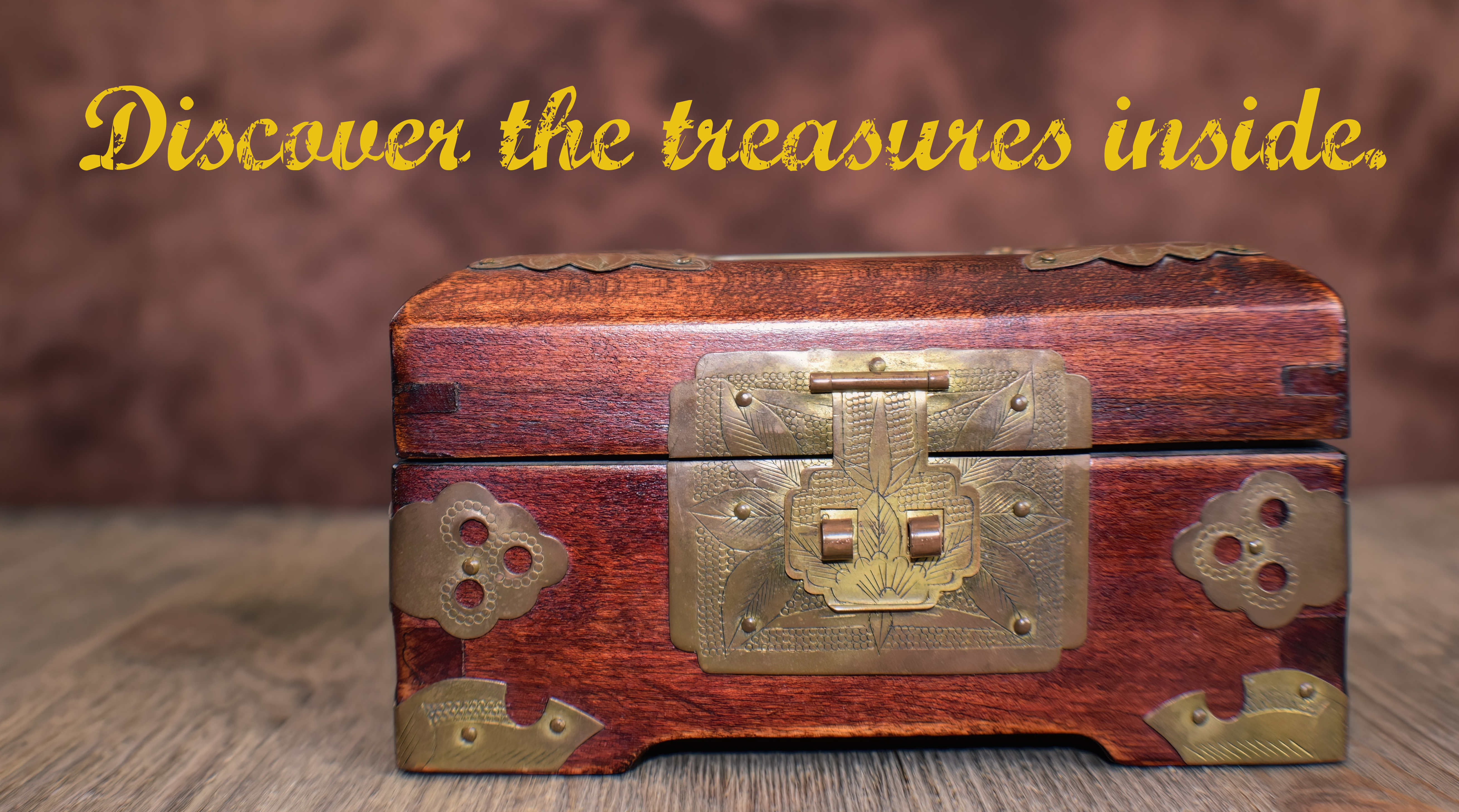
I encourage you to follow this example, putting away your survival kit and replacing it with a treasure chest. Whereas a survival kit is filled with things you need to control all the bad things that may (or may not!) happen in your life, a treasure chest is full of life, hope, and possibility. It helps you do so much more than survive. It allows you to thrive!  This Lenten season, I invite you to accept the treasure chest that God has filled for you.  Discover the treasures inside: love, acts of kindness, gratitude, present moment awareness, hope, faith, and trust. Carry that treasure with you always.

Mary and the Advent Story

The Advent story is full of rich and dramatic events, culminating in the birth of our Savior. For me, one of the most powerful ones is the angel Gabriel’s visit to Mary in Luke’s Gospel.

God chooses Mary and comes to her with an invitation—to bring Christ into the world. Mary’s response to this invitation is life-changing and world-changing. It’s impossible to overstate how huge this moment was. EVERYTHING, the very salvation of the world, hinged upon her response.

There is a tendency to believe that Mary didn’t really have a choice in the matter. That Gabriel came—not to ask her a question—but to tell her what was to be. To tell her what her destiny was to be. The problem with this interpretation is that it takes away any agency from Mary and misreads the moment as a passive one, as if Mary were simply swept along into God’s plans, without the opportunity to make her own choice. Without the chance to say “yes.”  

And so it’s worth spending a little time exploring the other possibility: Could Mary have said “no” to God?  Did Mary have free will in this situation?

From the very beginning of God’s interaction with the human race, our free will has always been respected. From the moment we were created, we have been free to make our own choices. Why wouldn’t the same be true for Mary? Which means she wasn’t programmed to say yes, like a robot, or coerced into saying yes, like a soldier obeying an order from a commanding officer. This wasn’t like the scene from the Godfather: “I’m going to make you an offer you can’t refuse.” But instead, through the angel Gabriel, God was issuing Mary an invitation. How she responded was entirely up to her. Knowing that fact…doesn’t it make her answer that much more powerful?  In the words of poet and author Christine Valters Paintner:

“When the angel Gabriel visits Mary, she is given a choice rather than a demand. Mary is active in her “yes” to the angel’s invitation as well as in her surrender: “Let it be done to me.” God’s unfolding of salvation is dependent upon Mary’s full ‘yes.’”

So what characteristics did Mary possess that allowed her to say yes? Mary was open to God’s plans for her life. She was willing to trust God. As scary as the prospect of bearing a child under such circumstances might have been, Mary trusted that this was the path God had chosen for her. And she was willing to surrender her own plans to answer God’s call. 

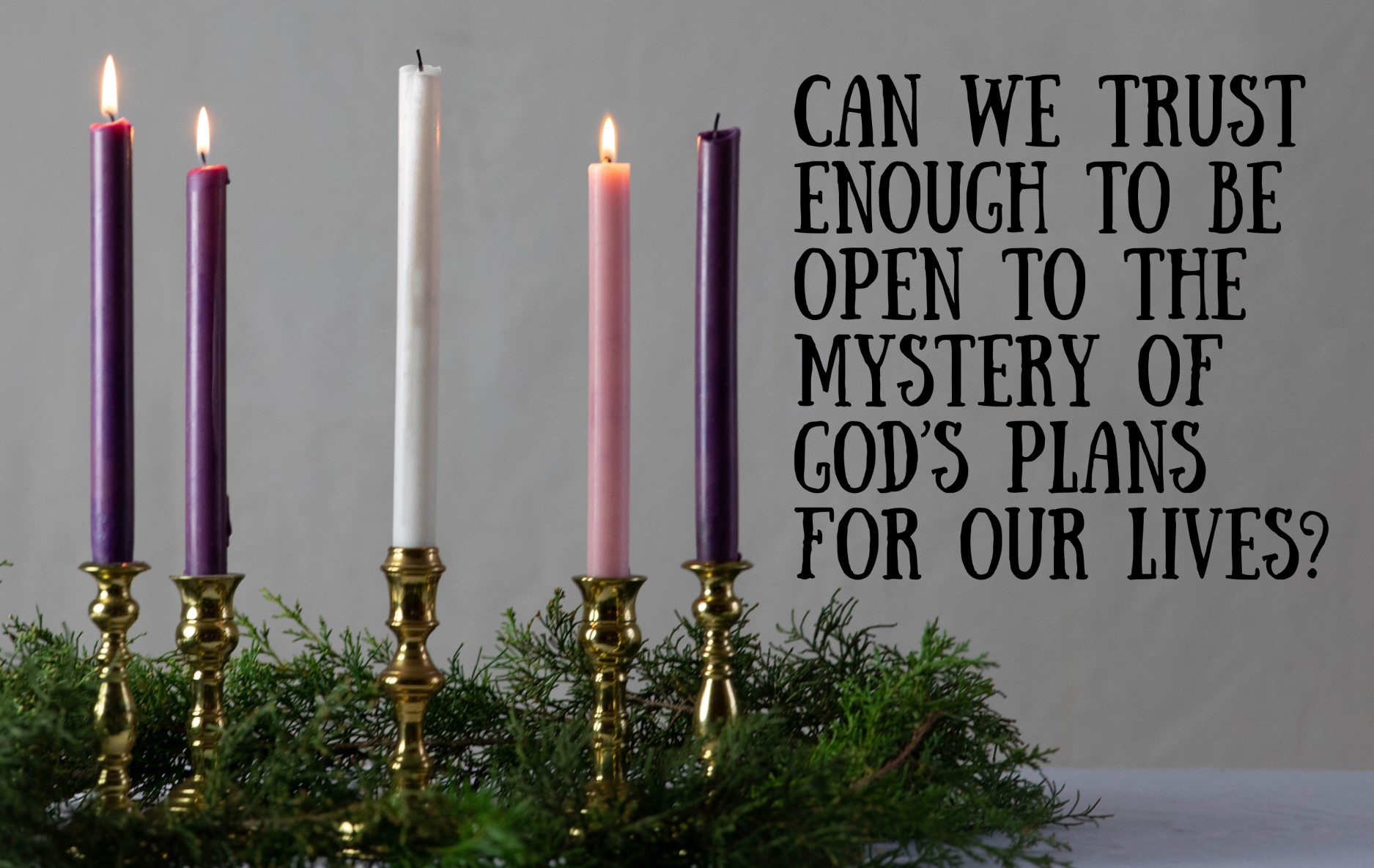
How often do we do this? It is so easy to stubbornly cling to our own plans even when we feel God nudging us in a different direction. Remember…we were born with the same free will that Mary was. Our choices are ours to make. God can only invite us to follow. Can we trust enough to be open to the mystery of God’s plans for our lives? 

Our answer to God is always a choice. Mary was asked to bring Christ into the world, and she answered yes. As Christians, we are asked to do that very same thing. Not in the same way that Mary did, but in the way we live our lives. In the way we interact with others. In the words we speak. In the deeds we do. What will our answer be?

Background photo by KaLisa Veer on Unsplash

Let God Lead the Way Through Lent

Do you have an exact date that you consider the “beginning” of the pandemic? For me it was March 15, 2020. That was the day I went to pick up my son at college after he was given 24 hours to pack up his things and leave school for the rest of the semester. My other son was home on spring break and told not to come back. Later that same day, I drove to my office, picked up my computer and files, and set up a home office, where I’ve been working ever since. In 27 days it will be exactly one year since life changed in so many drastic and challenging ways. 

Joy, connection, and hope would be replaced by fear, isolation, and monotony. Day after day, wondering…When would this end? Would all of my loved ones survive? Would I keep my job? When would we get our lives back? And I’m well aware that I’m one of the lucky ones! My family has remained healthy and safe. I still have my job. My boys were able to return to college for a few months in the fall. But still, the impact of the pandemic has been significant. It has changed me in ways I’m only just beginning to discover. I suspect that has happened to all of us.

With this constant feeling of weariness in my bones, I must admit that Ash Wednesday snuck up on me. It’s Lent already?!? I usually go ALL OUT for Lent—creating a schedule of activities I want to do, a list of books to read, a series of daily devotions to pray. I fill the season with so many ways to grow closer to God, to renew my faith, and to challenge myself.

In the past I’ve described Lent as a “sacred struggle”—an opportunity to embrace that which is difficult. To dig deep. To face temptations. To examine our personal failings. To work through barriers and blocks to our faith. But this Lenten season is different, and I don’t think that approach fits our current circumstances. Just getting through a typical day feels like a stretch for so many people. Keeping up with the basic functions of life is all many of us can manage, let alone a list of challenging faith-building activities that only ask (even demand) more of us. For some of us, it’s simply not possible at the moment to stretch ourselves in our faith. With our daily lives filled with so much struggle, our faith should be the one thing that comes easy.

So how can we approach Lent in a season that finds us tired, struggling, and worn out? 

Give yourself permission to put away your lists and schedules if you simply can’t manage them right now. Open your heart and simply let God in. As bleak as life might seem at the moment—in these dark and cold days of winter—God is still here! Choose one gentle and simple thing you can do to become aware of God’s presence in your life over the next 40 days. Don’t stretch yourself beyond that one thing for now. Just open the door of your heart a tiny crack, and God will enter. You’ll feel the light and warmth of Divine Love slowly seeping in. Let it happen in it’s own time. Don’t worry about forcing or prying that door open. Do what you can and let God do the rest.

My friend and I are trying a new thing for Lent this year. Each day we’re going to send each other a song. Thanks to the treasure trove of Christian and spiritual music on YouTube, this feels like a fun and easy thing to do, especially since an ocean separates us at the moment and digital communication is all we have. We’re going to let God’s love flow into that crack in our hearts through the beauty of music. The only thing we’re asking each other to do is listen. That feels exactly right for this season of weariness. I’m looking forward to seeing how this daily musical dose of God’s love affects us over these next 40 days.

Since God’s sense of timing is always impeccable, I received an email this morning from the Catholic chaplain at the university where I work. He spoke of how many of us are hurting, broken, and feeling “dead as dust” after an almost year-long pandemic. And he linked to this beautiful song, which I immediately sent to my friend. Indeed, God makes beautiful things out of the dust!

As you find your way through the Lenten season this year—in whatever way you can manage at the moment—I offer you this simple prayer:

Dear Lord, during this holy season of Lent
Help me to cast off despair, doubt, boredom, and frustration.
Help me to open my heart to feel your love in all places and spaces.
May I be filled with your love as I discover your promises during these 40 days.
May I return to you again and again when I drift away.
Gently pull me, lead me, and hold me through this season of hope.

AMEN.

Photo Credit: Photo 138620074 © Iwom22 | Dreamstime.com

The Wonder of Waiting

Advent is a season of waiting. A time to prepare for the coming of Christ. A period of anticipation. In general, how do you view the experience of waiting? Some people find it very difficult. They don’t have the patience or the trust to let the process unfold the way it’s meant to. (There are plenty of times when I fall into this category!) Research has shown that over the years people expect things to happen faster and faster. The pace of pedestrians walking on sidewalks has sped up. Road rage is more common. Waiting in line feels like agony for many people.

Other people welcome waiting because of how they choose to view it—as an act of anticipation instead of a waste of time. I have always felt that looking forward to an exciting event (a trip, a party, a special occasion) was just as enjoyable as the event itself. My husband tells me I live my life “looking forward to the next thing.” During this year of the pandemic, we’ve all been forced to put many of our plans on hold. It’s not easy, particularly in celebrating the holidays. My niece, Lucy —in her lovely optimistic way—predicted that next year, our holiday season will feel all the more joyful, because of how long we had to wait to gather with our families. Every hug will feel like a small miracle. The waiting is incredibly painful right now, but the joy that will come fills me with hope and excitement.

The season of Advent ushers in the coming of Christ, but we aren’t simply remembering that long-ago time of waiting for the birth of Jesus, something that happened 2000 years ago. Our waiting is active, and present, and alive. During Advent, there are three layers to our waiting:

  • Waiting for Jesus to be born (past)
  • Waiting for Jesus to come into our lives every day (present)
  • Waiting for Jesus to come again in glory (future)

It’s the second one—the everyday waiting—that I’m focused on these days. My college-aged sons have a car now, so when they come home from school, I never quite know when they’ll arrive. That excited feeling of wondering when they’ll walk through the door is so filled with hope. What if we approached every day with this sense of faith-filled anticipation? When or how will Christ come to us today? When will Jesus walk through the door of our hearts?

Each day brings opportunities for an encounter with our loving God…during a phone call with a friend, a walk with a family member, or an email exchange with a co-worker. Or you may find God while walking in the woods, admiring a sunset, or listening to the ocean. Christ may come to you in your art—through music, writing or any creative act.

In Latin, Advent means “coming,” not “finding.” We don’t have to go out and search for Jesus. Christ will come no matter what—that’s the core of our belief as Christians. We simply have to notice when He comes into our lives. This is a daily invitation—not just for the four weeks of Advent—but for every day throughout the year. Wake up each morning and ask yourself: “When will I encounter God today?” These moments are easy to miss when we’re preoccupied and distracted, so be awake and watchful in your waiting. Hold onto that excited feeling of waiting for a beloved family member to walk through the door, and I promise you won’t miss the moment when Jesus comes to you in your day.

Maranatha
Come, Lord Jesus!

Photo by Jon Tyson on Unsplash